Update, September 2026: since 10 August 2026 an SMSF can't take out a new loan to buy residential property; new SMSF loans can only fund business real property. Loans already in place, their refinancing and contracts exchanged before that date aren't affected. The deadline this checklist was written for has passed: a new residential purchase must now be paid from the fund's own money, and the lending stages below apply only to business premises. See Can my SMSF buy property? for the current rules.
The 10 August 2026 deadline for residential SMSF borrowing is approaching, and the window is closing for many trustees. If your self-managed super fund is planning to purchase residential property using a limited recourse borrowing arrangement (LRBA), the contract exchange typically needs to occur before the ban takes effect. It is the exchange of contracts, rather than the final settlement, that must occur before the deadline to ensure the arrangement is protected.
That distinction is significant. Experienced professionals who have handled numerous SMSF property transactions often observe that the gap between identifying a property and the exchange of contracts is where many deals encounter difficulties. Under typical conditions, an SMSF property purchase might take several weeks from identifying a property to contract exchange. With many SMSF lenders processing a surge of applications, these timelines may be extending.
This checklist is based on practical observations of the current SMSF property environment.
Stage 1: Confirming Your Fund Is Ready to Buy
Before signing a contract or making an offer, trustees typically ensure their SMSF is in order. Delays often occur because the fund itself was not fully prepared for a property purchase.
Here are the elements that generally need to be in place:
- A trust deed that permits borrowing. Older trust deeds, particularly those established before 2007, may not include provisions for LRBAs. Updating a trust deed typically takes several business days, and some providers may experience longer turnarounds during periods of high demand.
- An investment strategy that references property. The ATO generally expects an investment strategy to document why property is appropriate for the fund's circumstances. A generic strategy may not be sufficient. Trustees often have their financial adviser or accountant review and update this before proceeding.
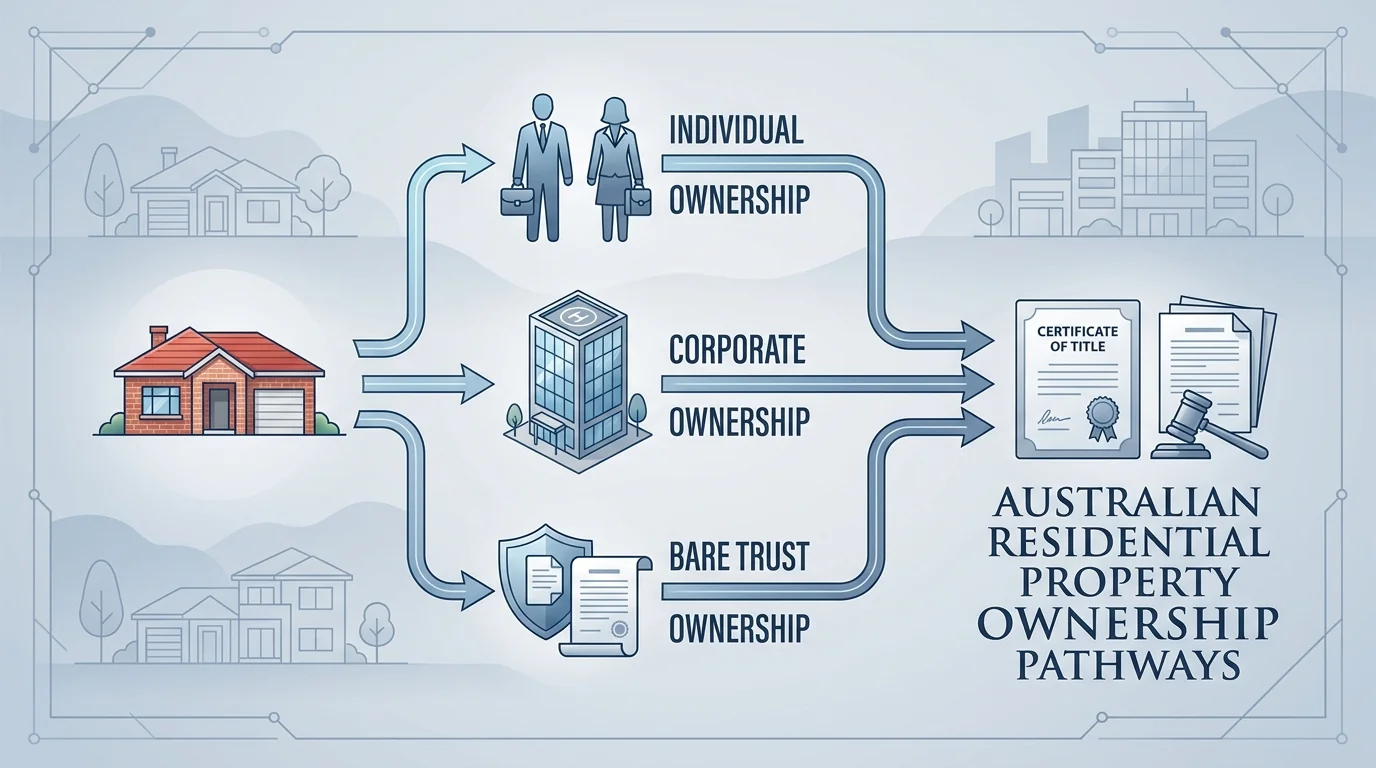
- The establishment of a bare trust (holding trust). Under an LRBA, the property is typically held by a separate bare trustee on behalf of the SMSF until the loan is repaid. Setting up the bare trust requires its own deed and the appointment of a trustee, either individual or corporate. This is a step that can sometimes be overlooked or delayed.
- A clean compliance history for the fund. Outstanding annual returns, overdue audits, or unresolved ATO compliance issues can cause difficulties with lenders and may delay the process. Trustees often check their fund's status through the ATO's SMSF reporting portal and consider addressing any outstanding matters promptly.
If these items are not addressed early, the timeline can become quite constrained, as each step has the potential to add a week or more to the process.
Stage 2: SMSF Property Due Diligence Considerations
SMSF property due diligence steps differ from a standard residential purchase. The superannuation rules impose restrictions that do not apply to purchases in an individual name, and errors in this area may result in the ATO viewing the arrangement as non-compliant.
The single member rule. Generally, the property is held for the sole purpose of providing retirement benefits to fund members. Under current guidelines, members or their relatives typically cannot reside in the property. If it is residential property, it cannot be leased to any related party of the fund. Commercial property has different rules, as related party leasing is permitted under certain conditions. If you are considering buying property to lease to your business, the requirements are specific and should be reviewed with a professional.
The single acquirable asset rule. Generally, an LRBA is used to acquire a single acquirable asset. While a house on one title is common, two adjoining lots on separate titles purchased together might be viewed as two assets. However, under ATO guidance (SMSFR 2012/1), if the titles cannot legally be disposed of separately under state law, they may constitute a single acquirable asset. It is recommended that trustees confirm the title structure early in the process.
Valuation requirements. The ATO generally expects SMSF assets to be valued at market value. The ATO's valuation guide sets out acceptable practices. For property purchases, the contract price generally reflects market value at the time of acquisition, but if purchasing commercial property from a related party, an independent valuation from a qualified valuer is typically required. It is common to budget one to two weeks for this.
Building and pest inspections. While these are not legally required in every state, skipping them in an SMSF purchase involves certain risks. Under an LRBA, the fund's ability to make improvements or alterations to the property is restricted. If a property has structural defects, the options for addressing them within the SMSF structure may be limited. Trustees often consider completing inspections during the cooling-off period or as a condition of the contract.
Stage 3: Lending Considerations and Timelines
This stage is often where the feasibility of a pre-deadline purchase is determined.
SMSF lending is a specialised market with fewer lenders offering LRBA products compared to standard residential lending. These lenders have their own compliance checks in addition to credit assessments. Under typical conditions, SMSF loan approval can take several weeks. With the 10 August 2026 deadline for residential properties, some lenders may experience increased turnaround times.
A few things to keep in mind regarding the current lending environment:
- Some SMSF lenders may stop accepting new residential LRBA applications as the deadline approaches if they cannot guarantee the process will be completed in time. It is helpful to check with a broker or lender regarding their current capacity.
- Lenders typically require the bare trust deed, SMSF trust deed, recent financial statements, and member statements. Having these ready may assist in the process.
- Pre-approval for an SMSF loan is generally an indication of willingness to lend in principle. Formal approval typically follows after the property is identified, valued, and the legal documentation is reviewed. The gap between pre-approval and formal approval can be several weeks.
- If an SMSF is using a combination of existing fund balances and borrowed funds, the lender will generally require evidence that the fund can service the loan from rental income and contributions. Lenders typically require a loan-to-value ratio (LVR) of no more than 70% to 80% for SMSF loans.
If a lender is not already identified and pre-approval is not in place, the timeline is likely to be very tight.
Stage 4: Contract and Conveyancing Considerations
The conveyancing stage of an SMSF purchase is where specific structural requirements must be met. It is generally required that the contract be in the correct name, typically the bare trustee rather than the SMSF trustee or individual members, as this is a common area for errors.
Ensuring the purchaser name is correct on the contract is an important step. Errors in this area can lead to the need for contract amendments or other legal adjustments, which may cause delays during a period when time is limited.
Trustees often have the contract reviewed by a professional who understands SMSF structures before it is signed. They typically check that:
- The purchaser is correctly identified as the bare trustee acting for the bare trust.
- The settlement period allows sufficient time for LRBA loan approval and documentation.
- Any special conditions relating to SMSF financing are properly drafted.
- Stamp duty concessions or exemptions are correctly applied based on the relevant state or territory rules.
Standard conveyancing searches, such as title searches and planning certificates, should be ordered promptly once the contract is signed. In some jurisdictions, search turnaround times can increase during busy periods. For peak season settlements, ordering these searches immediately is often necessary.
Stage 5: The Settlement Process
Settlement day for an SMSF property purchase involves several moving parts. The lender releases funds to the bare trustee's account, the SMSF trustee ensures any cash contribution is transferred, and the bare trustee executes the transfer documents.
Electronic settlement platforms have made the mechanical process more efficient, but the preparation leading up to settlement day remains critical. Common issues that can arise include:
- Delays in the lender's solicitor receiving or approving the bare trust deed.
- Incorrect fund details registered with the settlement platform.
- Delays in stamp duty assessments being issued by the revenue office.
- Last-minute requisitions from the vendor's solicitor.
Each of these can delay settlement. When working toward a legislative deadline, ensuring these details are managed early is beneficial.
Assessing the Remaining Timeline
If contracts have not yet been exchanged, a realistic assessment of the timeline is necessary. Working toward a mid-August 2026 deadline typically involves:
- Settlement preparation and final checks: approximately 1 week.
- Conveyancing searches and contract review: approximately 2 to 3 weeks.
- Formal loan approval after property identified: approximately 3 to 5 weeks.
- Bare trust and SMSF documentation: approximately 1 to 2 weeks, which can often run in parallel with the loan application.
This represents several weeks of sequential and concurrent work. If starting the process now, trustees often find the margin for error is limited.
If pre-approval is already in place and fund documentation is current, the timeline is more manageable. However, any delay in the process, such as a slow lender response or a delayed search result, could impact the ability to meet the deadline.
Potential Consequences of Missing the Legislative Deadline
Following the passage of the legislation, which received Royal Assent on 26 June 2026, SMSFs will generally no longer be able to enter into new LRBAs to purchase residential property after 10 August 2026. Existing LRBAs already in place will be grandfathered, meaning current SMSF loan arrangements should continue under the existing rules.
Commercial property LRBAs are unaffected by this change and may continue to be established after the deadline. For residential purchases, authoritative sources confirm that contracts exchanged before the commencement date of 10 August 2026 are protected, even if settlement occurs after that date. A signed and exchanged contract would typically qualify for protection under the transitional provisions.
Trustees considering an SMSF property purchase may find it beneficial to speak with a conveyancing firm that handles SMSF transactions regularly. Trustees often find that working with a firm that handles numerous SMSF settlements can be helpful, as experience in this area may assist in identifying potential issues earlier in the process.
Given the upcoming deadline for residential property, involving professional advisers early is a recommended step. If you would like to discuss your situation, understanding your fund's readiness is a useful starting point, and our team is available to discuss the process with you.