If your fund is considering borrowing to buy premises, the first question is no longer about loan-to-value ratios or lender panels. It is whether the property is business real property at all. Under the Treasury Laws Amendment (Tax Reform No. 1) Act 2026, from 10 August 2026 a new limited recourse borrowing arrangement (LRBA) may only be used to acquire real property that meets that definition. The property must meet the definition when the LRBA is entered into and for the entire life of the loan. A written compliance checklist is worth completing before you exchange contracts, not after.
The change is narrower than some commentary suggests. SMSFs can still buy residential property outright, without borrowing, and can still borrow to buy business real property. Existing residential LRBAs are grandfathered and may be refinanced. Where the contract of sale was entered into before 10 August 2026, the acquisition may still settle under an LRBA after that date. What has gone is the ability to use a new LRBA to buy residential property that is not business real property.
The restriction catches any real property that is not business real property. That includes most residential investment property, but it may also catch some non-residential holdings. Equally, some residential property can qualify. Use, not zoning, decides the question.
Start With the Statutory Definition, Then the Ruling
The definition sits in section 66 of the Superannuation Industry (Supervision) Act 1993 (SIS Act) and turns on real property used wholly and exclusively in one or more businesses. The business does not have to belong to a fund member or a related party. A lease to an unrelated trading company can satisfy it just as readily as premises rented to the member’s own business, which is the arrangement discussed in our guide on buying an SMSF property to rent to your business.
The section alone does not answer every case. The ATO’s ruling SMSFR 2009/1 sets out the Commissioner’s view of how the definition applies, with worked examples. The statutory words are strict, and the ruling explains how the ATO approaches them in practice. Trustees should read both.
Element One: Wholly and Exclusively Use
The starting proposition is strict. The property must be used wholly and exclusively in business throughout the life of the LRBA. Any private, domestic or other non-business activity on the land is a question mark against the definition. The trustee must be satisfied about actual use, not intended use.
Two practical consequences follow. First, the analysis covers the whole holding, so a house on a large block, a residence on a farm or a caretaker’s flat above a shop all need separate attention. Second, use can change. A property that qualified when the LRBA was entered into may not qualify three years later if the tenant leaves and a family member moves in. If the property stops being business real property during the LRBA, the fund fails to maintain the LRBA in accordance with the rules.
A temporary vacancy is not of itself fatal. Leased commercial premises do not stop being business real property only because the owner is looking for a new tenant. If the owner abandons plans to lease the property, however, it no longer qualifies.
Element Two: Unused Areas
Not every square metre of a site will be in active use. An unused rear yard or a vacant upper floor does not involve private use, but it does raise the question of whether the property as a whole is used in the business. The legislation contains no percentage test. Document the business use, measure the areas involved and record your reasoning. If the business footprint is marginal, expect questions at audit. The ATO publishes guidance on compliance audits of an SMSF, and a thin file is not a comfortable place to be.
Element Three: Private Use That Serves the Business
Some private occupation is part of how a business runs. A motel that needs a manager living on site around the clock is a common example. The manager’s occupation is not a business activity in isolation, yet the motel cannot operate without it. The ruling accepts that private or domestic use can be consistent with the definition where it is relevant and incidental to the business. In one of its examples, tenants’ private use of residential units is treated as incidental to a property investment business.
The distinction to hold onto is between use that serves the business and use that merely coexists with it. A manager’s residence required for 24-hour operation is one thing. A relative living rent-free in a cottage on the site is another. The question is whether the private use is genuinely necessary to the business, and the answer should be evidenced in the lease, the business records and the way the site is actually run.
Element Four: Residual Non-Business Use
Any non-business use that remains after the above analysis needs separate assessment. A small, incidental and stable use is less likely to cause a problem than a pattern of private occupation that grows over time. Treat residual private use as a risk to document and minimise, not as a safe harbour.
Element Five: The Primary Production Safe Harbour
Primary production properties get specific treatment. Where a property used in a primary production business includes a dwelling used for private or domestic purposes, the property can still qualify if two conditions are met. First, the dwelling must sit on an area of land of no more than two hectares. Second, the main use of the whole property must not be for private or domestic purposes. Both conditions must be satisfied, and the two hectare figure is a ceiling, not a target.
For rural holdings, this is often the difference between a workable acquisition and a failed one. It also means the checklist for a farm looks different from the checklist for a warehouse. Survey measurements of the land used with the dwelling, and evidence of the relative scale of the production activity, belong in the file.
Your Working SMSF Property Compliance Checklist
Before you commit to a loan-funded purchase, work through the following and record your answers in writing. Auditors and advisers will expect to see this analysis.
- Identify the actual use. What happens on the land day to day, and who is doing it? Rely on actual use, not the zoning, the marketing description or the intended use after settlement.
- Confirm the business connection. Whose business is it, and is there a lease or licence in place on arm’s length terms? A related-party tenant is permitted, but the arrangement needs to be documented and commercial. Our article on ownership structures for business real property covers the structural side.
- Map the business and non-business areas. Measure what is used for business, what is unused and what is used for private or domestic purposes.
- Assess unused areas. If part of the site is idle, can you show that the property as a whole is still used in the business?
- Test private use against the business need. Is the private use relevant and incidental to the business, as with a 24-hour on-site requirement, or merely convenient?
- Assess residual use. Is any remaining non-business activity genuinely minor and stable, or is it capable of growing?
- For primary production, measure the land. Is the area of land containing the dwelling no more than two hectares, and is the main use of the whole property clearly not private or domestic?
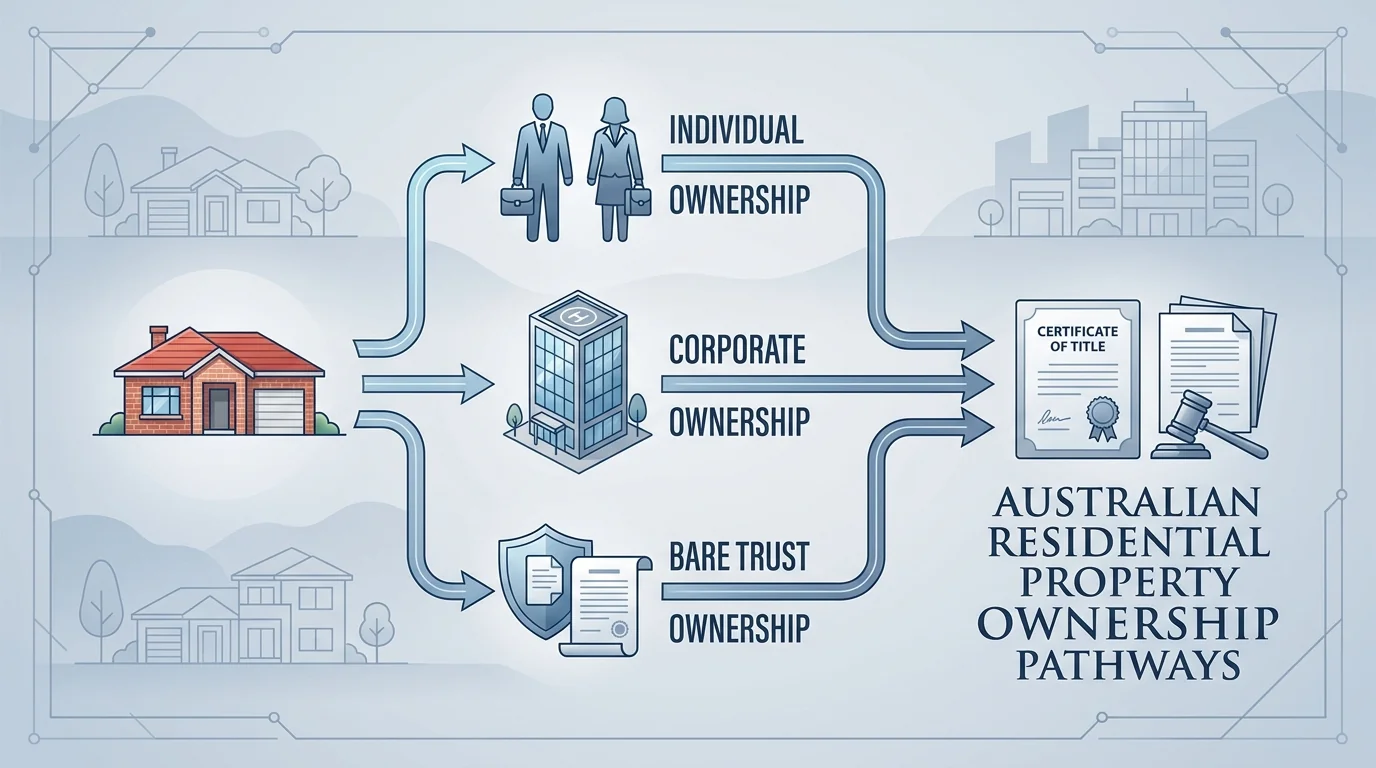
- Check the fund’s trust deed and structure. Does the deed permit the acquisition and the borrowing, and is the holding trust arrangement in order? The comparison in our guide to individual trustees, corporate trustees and bare trusts is a useful starting point.
- Plan for ongoing monitoring. Who checks use each year, and what happens if the tenant’s business changes or ceases? A vacancy while you genuinely seek a new tenant is not fatal. A decision to stop leasing is.
Where Trustees Commonly Come Unstuck
Three patterns cause trouble. The first is relying on the contract’s description of the property rather than its actual use. The second is assuming a related-party tenant is a problem in itself, when the real issue is whether the use is business use and the terms are commercial. The third is treating a favourable answer at the start of the loan as permanent, when the property must qualify for the life of the LRBA.
There is also a structural point worth flagging. While the loan is outstanding, the property is held on a separate holding trust (commonly called a bare trust) for the fund, so the name on title will not match the fund’s name. Moneysmart’s guidance on SMSFs and property is a plain-language starting point for members new to the rules.
Getting the Assessment Right Before You Exchange
The definitional elements are not complicated to list. Applying them to a specific title, with a specific tenant and a specific floor plan, takes care. We have acted on over 2,500 SMSF property transactions across Australia and work regularly with SMSF auditors and financial planners.
This article sets out general information only. It is not legal, tax or financial advice, and it does not predict how the Commissioner would view any particular property. Whether a holding meets the business real property definition depends on its own facts, and the consequences of getting it wrong can be costly to unwind.
If you are working through a potential acquisition, or you want a second set of eyes on the use and structure before contracts are prepared, speak with us. Call our office or submit an enquiry through the website, and we can work through the checklist against your circumstances.