Update, September 2026: since 10 August 2026 an SMSF can't take out a new loan to buy residential property; new SMSF loans can only fund business real property. Loans already in place, their refinancing and contracts exchanged before that date aren't affected. The borrowing steps in this post now apply to business premises and to loans already in place. See Can my SMSF buy property? for the current rules.
The High Stakes of Superannuation Property
In my 15 years as a lawyer, I have overseen more than 2,500 SMSF property transactions across Australia. The most common error I see does not happen at settlement. It happens at the very beginning, often before a contract is even signed, when a trustee assumes that buying a factory or a rental property with their super is the same as buying a family home. It is not.
The regulatory environment surrounding Self-Managed Super Funds (SMSFs) is unforgiving. Unlike a personal purchase, where a mistake might cost you a few hundred dollars in administrative fees, a mistake in an SMSF transaction can trigger double stamp duty, compliance breaches, or even force the fund to sell the asset. This makes the **best SMSF conveyancer selection** a matter of asset protection, not just administrative processing.
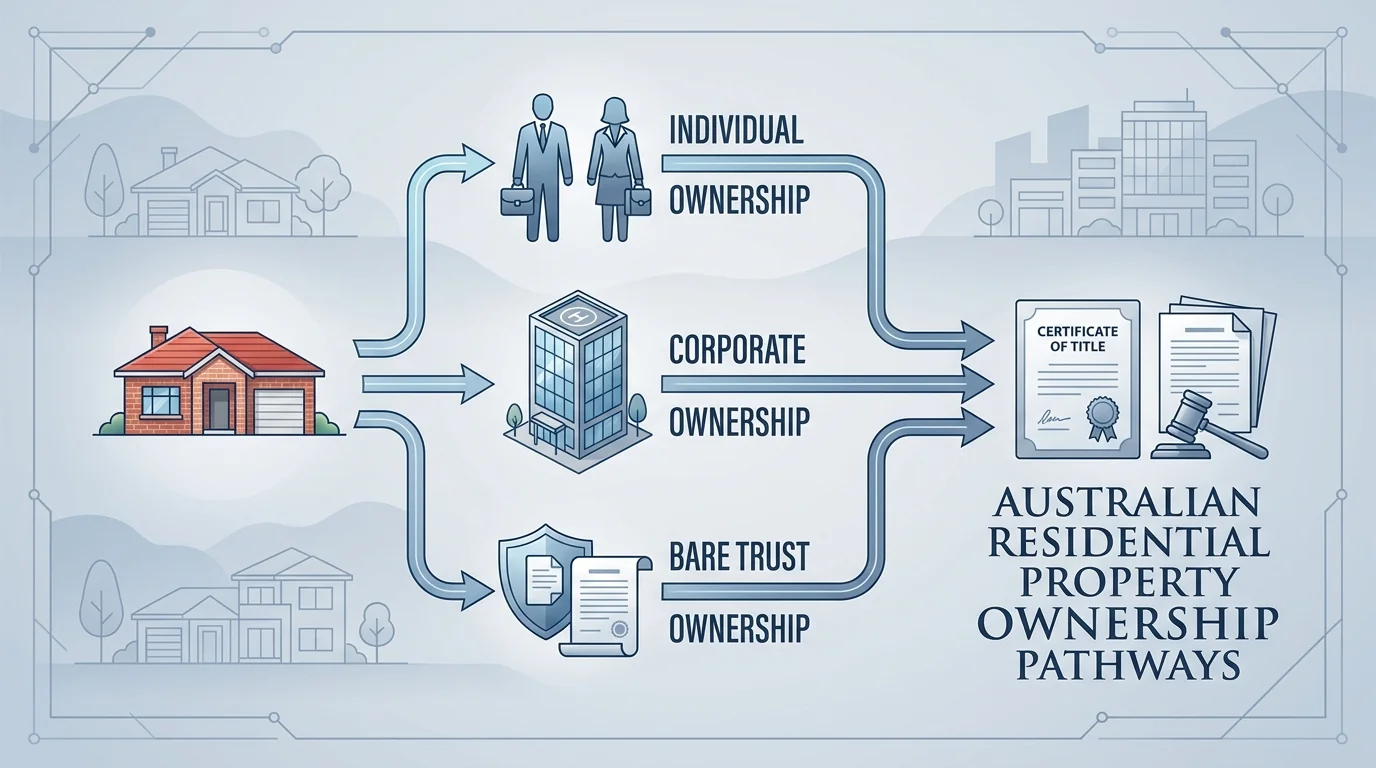
When you purchase property personally, you are the legal and beneficial owner. When your SMSF purchases property using borrowed funds, the structure changes entirely. You enter the realm of Limited Recourse Borrowing Arrangements (LRBA), holding trusts, and strict compliance with the Superannuation Industry (Supervision) Act 1993 (SIS Act). Your legal team must understand these layers, or your retirement savings could be at risk.
Understanding the Role: More Than Just a Transfer
Many trustees ask why they cannot use the local solicitor who handled their home purchase. While your local solicitor may be excellent at standard residential conveyancing, SMSF vs personal property purchase requires a different skill set. Standard conveyancing deals with the transfer of title. SMSF conveyancing deals with the transfer of title within a specific, restrictive legislative framework.
In a standard transaction, the conveyancer checks the contract, organises the adjustment of rates, and ensures the money moves to the vendor. In an SMSF transaction, your lawyer must also verify that the purchasing entity is correctly structured to satisfy the Australian Taxation Office (ATO) and the lender. If the name on the contract is incorrect (for example, if you sign in your personal name "as trustee" rather than the corporate trustee name, or if the Bare Trust deed is not executed in the correct sequence) the entire transaction can fail.
We have seen instances where generalist conveyancers advised clients to sign contracts before the Bare Trust deed was stamped or even established. In some states, this specific sequencing error triggers a requirement to pay stamp duty twice: once on the transfer to the Bare Trust and again on the eventual transfer to the SMSF. This is a mistake that can cost a fund tens of thousands of dollars, yet it is entirely preventable with the right advice.
The "Simple" Cash Purchase Trap
Even if your fund has enough cash to buy the property outright, engaging a practitioner remains necessary. While you may not need a Bare Trust for a cash purchase, you still need to ensure the property is acquired in a way that allows for future flexibility. Member experiences with self-managed superannuation often highlight the confusion that arises when documentation is ambiguous. If the title is not registered correctly, it may be difficult to prove to an auditor that the asset belongs to the fund and not the individual, potentially violating the separation of assets rule.
Specific SMSF Conveyancer Requirements
When interviewing potential lawyers or conveyancers, you need to look beyond their fee structure. You are hiring a risk manager. Based on our experience with over 1,000 successful transactions in the last five years alone, here are the non-negotiable **SMSF conveyancer requirements** you should look for.
1. Deep Knowledge of the SIS Act
Your legal representative must understand what an SMSF can and cannot do. For example, can you buy a residential property and rent it to your daughter? (No). Can you buy a commercial warehouse and rent it to your own business? (Yes, under specific conditions). A practitioner will spot these compliance issues immediately. If your conveyancer does not ask who the tenant will be, that is a red flag.
2. Experience with Lender Requirements
Banks are notoriously strict with SMSF loans. Their legal teams will scrutinise every document, from the SMSF Trust Deed to the Custodian Trust Deed. A generalist conveyancer often gets stuck here, leading to delays that can cause you to miss your settlement date. A practitioner knows exactly what the major lenders (and second-tier lenders) require and will prepare the documents to match those expectations before the bank's lawyers even see them. This proactive approach is why our team maintains a 99.2% successful settlement rate.
3. The Bare Trust
The Bare Trust (or Holding Trust) is the entity that holds the property title while the loan exists. Drafting and reviewing this deed is not standard conveyancing work. It is a legal instrument that must align perfectly with the laws of the state where the property is located. Your legal team must be familiar with the nuances of state-based duty laws regarding trusts.
The Commercial Property Nuance
A significant portion of SMSF investors look to commercial property, often to house their own business. This strategy, known as acquiring Business Real Property, offers distinct advantages but adds another layer of complexity. You need to ensure the lease between your SMSF and your business is on commercial, arm's-length terms.
We frequently see issues where the lease is not drafted correctly, or the rent is set at a rate that an auditor would flag as non-compliant. How to buy an SMSF property to rent to your business is a question that requires input from both your accountant and your lawyer. Your legal team needs to coordinate with your financial planner or accountant to ensure the lease agreement satisfies the "sole purpose test" and does not breach the in-house asset rules.
Furthermore, the pros and cons of buying commercial property through your SMSF often depend on the exit strategy. A good lawyer will ask: "What happens if the business fails? What happens if you want to sell the property but keep the business?" These are questions standard conveyancers rarely consider.
Navigating the Timeline
One of the biggest shocks for first-time trustees is the timeline. A standard residential settlement is usually 30 to 42 days. **SMSF property conveyancing Australia**-wide generally requires longer: often 60 to 90 days. This is because the banking approval process for SMSFs is far more rigorous.
If your legal team does not warn you about this, you might sign a contract with a 30-day settlement period. When the bank inevitably takes 45 days to approve the loan documents, you will be in default under the contract, liable for penalty interest, and at risk of losing your deposit. A competent SMSF lawyer will advise you to negotiate a longer settlement period upfront to protect your deposit.
The Cost of "Cheap"
In the legal industry, fixed-fee conveyancing is common. However, trustees should be wary of quotes that seem unusually low. Often, these quotes cover only the "standard" conveyancing work. They exclude the review of the trust deeds, the liaison with the lender's lawyers, and the drafting of necessary trustee minutes.
When these "extras" are added later, the cost often exceeds that of an experienced SMSF conveyancing lawyer. More concerning is when these tasks are simply not done. We have taken over files where the previous conveyancer failed to review the bank's loan offer, resulting in the trustee signing a document that contained errors regarding the security property. Rectifying these errors after settlement is difficult and expensive.
Research suggests that the sector is evolving. What does 2026 look like in the SMSF sector? Analysts predict a move toward higher specialisation as regulations tighten. Trustees who align themselves with experienced practitioners now are future-proofing their funds against regulatory shifts.
Questions to Ask Your Prospective Lawyer
To ensure you are making the **best SMSF conveyancer selection**, treat the engagement like a job interview. Here are specific questions you should ask:
- "How many SMSF settlements did you handle last month?" If the answer is "one or two," they may not be up to speed with current bank requirements.
- "Do you review the Bare Trust Deed as part of your fee?" This document is central to the borrowing arrangement. It must be reviewed.
- "Will you review the loan and mortgage documents provided by the bank?" Never sign bank documents without legal advice.
- "Are you familiar with the specific stamp duty concessions for SMSFs in this state?" Some states offer duty concessions for transfers from members to funds (where permitted). Missing this could cost you thousands.
The Role of Independent Legal Advice
Most lenders require the trustees and the guarantors (usually the members in their personal capacity) to obtain independent legal advice. This is a certificate signed by a solicitor confirming that you understand the risks of the loan.
Your conveyancing lawyer usually cannot sign this for you due to a conflict of interest. They are acting for the purchaser (the SMSF trustee), while the guarantee is a personal obligation. A well-connected SMSF legal firm will have a network of independent lawyers they can refer you to for this specific component, preventing last-minute scrambles to find a solicitor willing to sign off on complex documents.
Academic and Industry Perspectives
The complexity of this area is well-documented. The SMSF: a mechanism for self-directed member investment notes that the suitability of these structures depends heavily on strict adherence to the rules. The research underscores that while the mechanism allows for control, it demands a level of sophistication (or at least, the hiring of sophisticated advisors) that many retail investors underestimate.
Final Thoughts for Trustees
Buying property in your SMSF is a significant financial step. It involves large sums of capital, long-term debt, and your future retirement lifestyle. The legal team you choose acts as the gatekeeper to a compliant, successful settlement.
Do not leave this decision to chance or convenience. Seek out professionals who live and breathe SMSF property conveyancing. The cost of experienced advice is a fraction of the cost of a compliance breach. By focusing on experience, technical knowledge, and a risk-averse approach, you can navigate the complexities of the system and secure your retirement asset with confidence.
If you are considering an SMSF property purchase, we encourage you to seek professional advice tailored to your specific circumstances before signing any contracts.